At Textilfy we specialise in customising fabrics with the designs that our customers send us. We are textile digital printers. One of the most worked fabrics are the different types of twill fabric that we sell. Specifically, we have two types of cotton twill and two types of polyester twill. But, in addition, we have a polyester twill fabric and a viscose viyella that also have a twill weave. You can see all these fabrics by applying the “twill” filter in our list of fabrics.
In this blog post I want to tell you a little more about this fascinating and versatile fabric that can help you with your customization projects. This material, twill, known for its distinctive diagonal pattern, offers both style and functionality to a wide range of products. Let’s see what twill fabric is, how it is woven, its uses, advantages and some disadvantages.
Twill fabric is a type of textile fabric characterized by having a pattern of parallel diagonal lines. This design is achieved by means of a particular weave weave that alternates the warp (longitudinal) and weft (transverse) threads, thus creating a series of inclined lines that give the twill its unique appearance. This weave gives the twill fabric superior strength and durability, making it ideal for a variety of applications.
The ligament of the twill tissue
The heart of what makes twill fabric special is its ligament. In terms of weaving, the “weave” refers to the interlocking pattern of the warp and weft yarns. In the case of twill, this pattern shifts or “jumps” one more thread in each successive row, thus creating the characteristic diagonal lines. This weaving method not only brings an interesting and visually appealing texture, but also increases the density and strength of the fabric, making it more durable and less prone to dirt and stains.
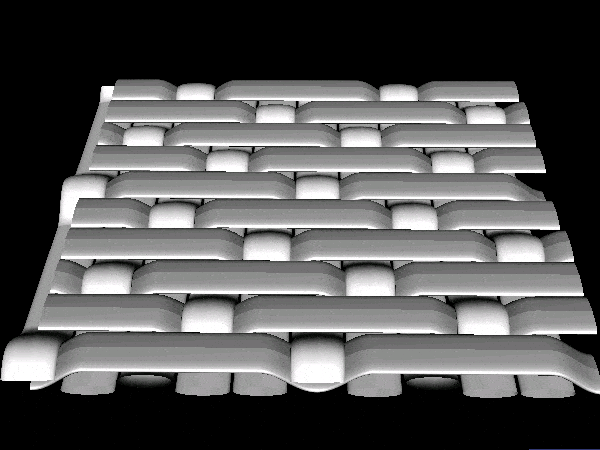
This cord formed diagonally by the crossing of the warp with the weft is combined with more or less threads and at equal or unequal distances between one cord and another. From these combinations result the different names given to the qualities of twill such as batavia serge, satina serge, Roman serge, interrupted twill, broken twill, compound twill, virginia twill…
Uses of twill fabric
Twill fabric is used in a wide range of applications, thanks to its strength and flexibility. Some of the most common uses include:
- Apparel: Thanks to its durability and comfort, twill is a popular choice for pants, including jeans, jackets, and uniforms. It is also used in robes, aprons, etc.
- Home decoration: Its resistance makes it an ideal material for upholstery, curtains and other decorative elements.
- Accessories: Bags, backpacks, purses, or toiletry bags are often made from twill fabric due to its wear resistance and attractive aesthetics.
Advantages of twill fabric
- Durability: One of the greatest benefits of twill is its resistance to wear, tears, and wrinkles.
- Maintenance: Its dense structure makes it less prone to dirt and makes it easier to clean.
- Aesthetics: The diagonal pattern adds an interesting visual dimension that can enhance the design of any project.
Disadvantages of using twill fabric
- Weight: Twill can be heavier than other fabrics, which might not be ideal for all applications.
- Cost: The complexity of its tissue can make twill more expensive than simpler ligament tissues like taffeta.
Twill fabric is an excellent choice for a wide range of projects, from fashion to home décor. At Textilfy, we offer the possibility of customizing this fabric with the design you want, opening up a world of creative possibilities. Although it has some drawbacks, the advantages of durability, maintenance and aesthetics make twill a popular choice for many years among designers and manufacturers.
Write to us at hello@textilfy.com or call us at 910493991 if you have any questions about what type of twill fabric may work best for the project you are working on.
 Share in Instagram
 Share in X