Textile sublimation is a printing process widely used in the textile industry to transfer designs, patterns, or images to fabrics using special inks and heat. This printing method offers a number of significant advantages in terms of quality, durability, versatility, customization, speed, and sustainability, making it a popular choice for the production of a wide variety of custom textile products.
Textile Sublimation Process
At Textilfy, all synthetic fabrics are printed using this technique. The process is relatively simple and the result is very good.
First of all, it is printed on transfer paper or sublimation paper with a printer that can be more or less large depending on the number of meters per hour it is capable of printing. There are many brands on the market, such as EPSON:
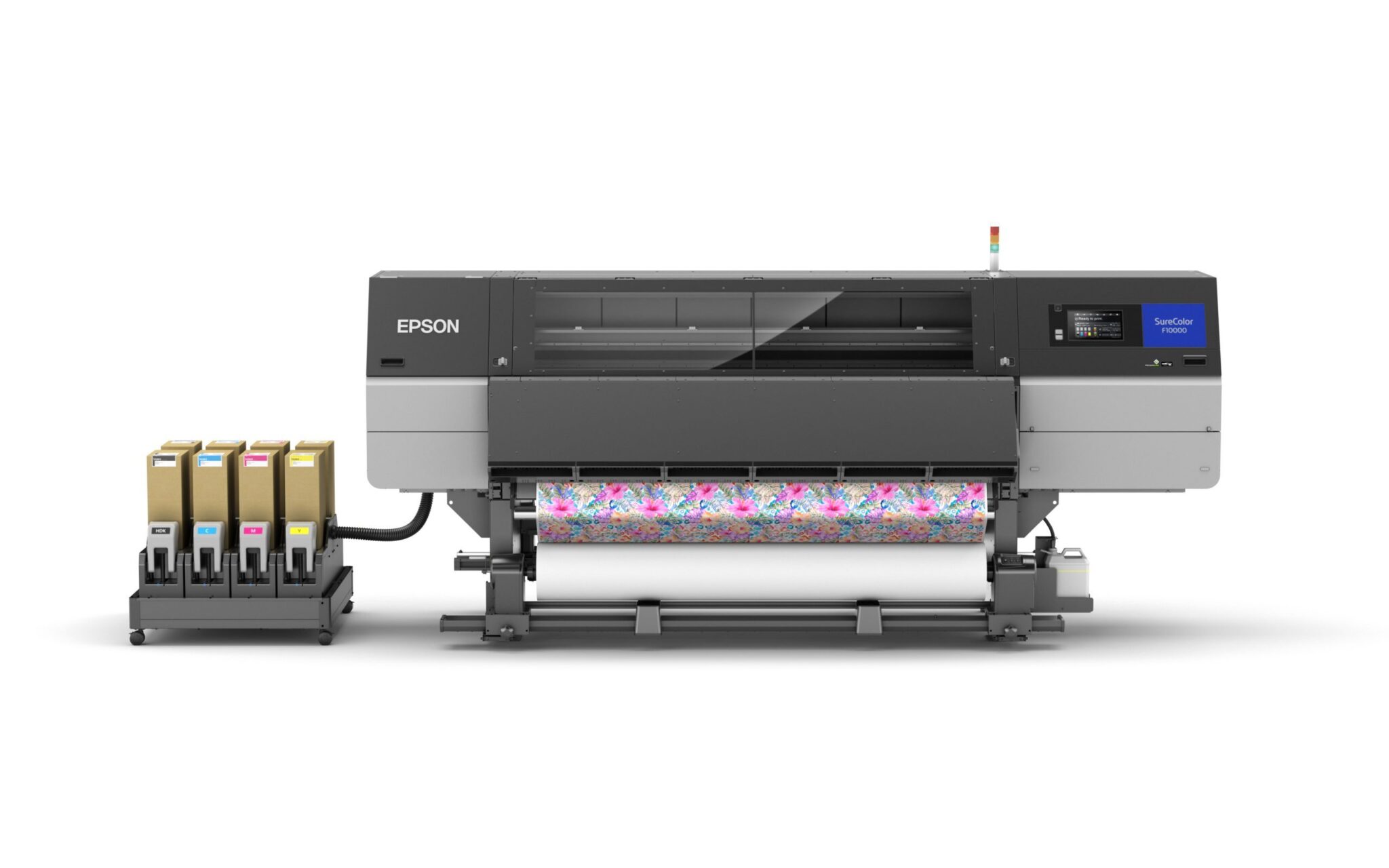
Once you have the paper printed, you take it out of the machine wound and place it in another machine called a calender. The calender is a machine that incorporates in its core a cylinder filled with oil that is heated to a temperature of approximately 190º. You can obviously regulate it according to the capacity of the machine and the speed at which it can go. The machine is like this:
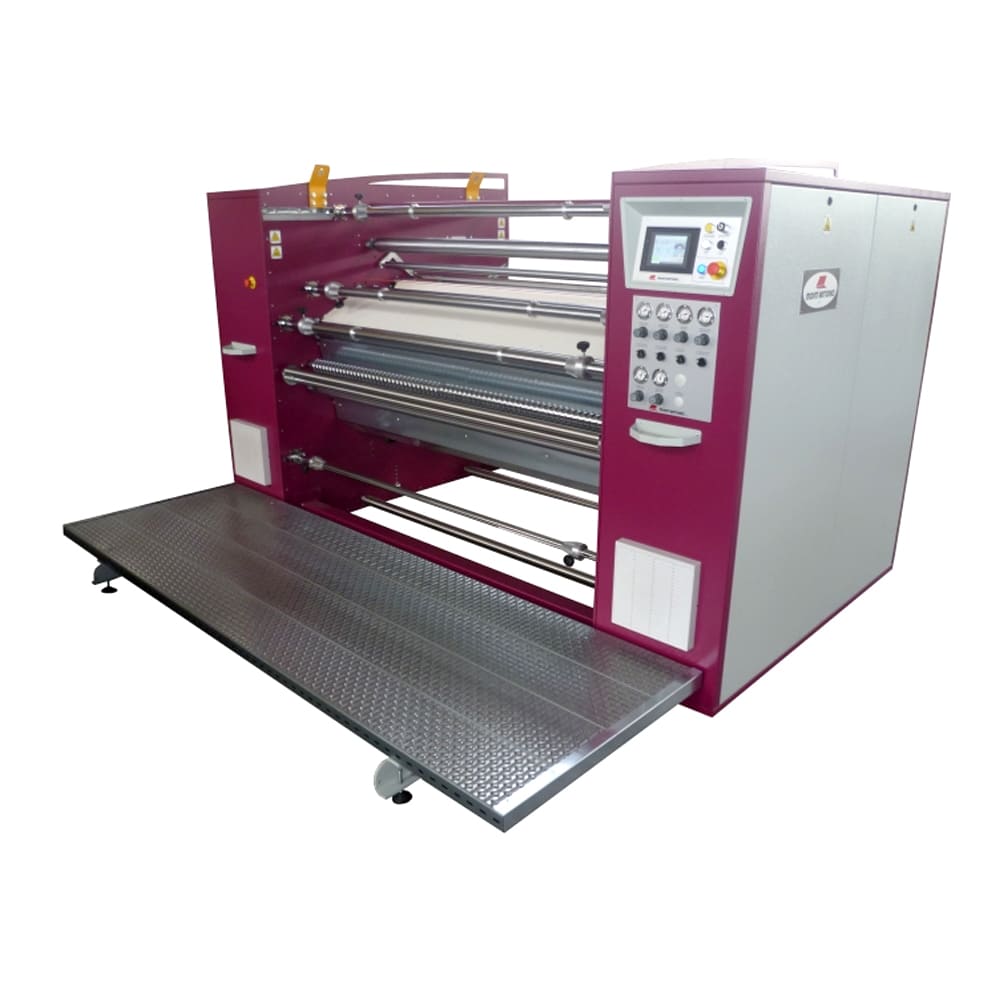
When you have already placed the sublimation paper that has previously been printed on the printing machine, you also incorporate the fabric on which you want to sublimate into the calender.
Making a kind of sandwich, the fabric together with the paper with the ink pass through the hot cylinder and at that moment the ink from the paper passes into the fabric.
The result obtained on the fabric is very good, with great color performance and great resistance to rubbing and washing. In particular, to fully understand textile sublimation and all its implications, it is important to examine in detail each of the key aspects of this process:
Print quality with textile sublimation
Print quality is one of the most outstanding characteristics of textile sublimation. This method allows for the reproduction of designs with vibrant colors, sharp details, and smooth gradations, resulting in high-resolution, near-photo quality prints. The sublimation ink melts with the fibers of the fabric during the transfer process, ensuring that the print is durable and resistant to washing, rubbing and wear. This high-quality reproducibility is especially beneficial for the creation of custom textile products, where precision and fidelity of designs are critical.
Sublimation Durability
Durability is another key advantage of textile sublimation. Because the sublimation inks are fully integrated into the fabric fibers during the transfer process, the resulting prints are highly durable and resistant to repeated washes and prolonged use. This means that sublimated textile products maintain their original appearance and quality for extended periods of time, making them ideal for applications that require strength and longevity, such as sportswear, workwear, and promotional products.
Versatility
Textile sublimation can not only be carried out on a continuous fabric roll. It also extends to a variety of textile products, including apparel, accessories, home décor, promotional products, and more, further expanding its usefulness and application in different industries and sectors.
Speed
Textile sublimation is a relatively fast and efficient process compared to other printing methods. Once the design has been created and the file has been prepared for printing, the sublimation process can be completed in a matter of minutes, allowing for streamlined production and rapid response to market demands. This speed in production is especially beneficial in commercial and manufacturing environments where turnaround time and the ability to meet tight deadlines are critical to business success.
Sustainability of sublimation
Textile sublimation also offers benefits in terms of sustainability and environmental responsibility. Sublimation inks do not contain harsh chemicals or generate toxic residues, making them more environmentally friendly compared to some other printing methods. Specifically, our inks have OEKO-TEX class 1 certificates.
In addition, the sublimation process does not require the use of water in the printing process, which helps to reduce the consumption of natural resources and minimizes the environmental impact associated with textile production. We only apply dry heat through the grille, which is also powered by energy from a photovoltaic installation that we have on the deck of our warehouse. This makes textile sublimation a more sustainable option for the production of custom textile products.
In conclusion, textile sublimation is a highly effective and versatile printing process that offers a number of significant advantages in terms of quality, durability, versatility, customization, speed, and sustainability. This technique is widely used in the textile industry for the production of a variety of customized products, from apparel and accessories to home décor and promotional products. With its ability to reproduce high-quality designs across a wide range of materials and products, textile sublimation remains a popular and cost-effective option for manufacturers, designers, and consumers alike.
If you have doubts or do not know what type of synthetic fabric to choose for the use you have in mind, share it with our team by writing to hello@textilfy.com, calling +34910493991 or through our chat.
 Share in Instagram
 Share in X